
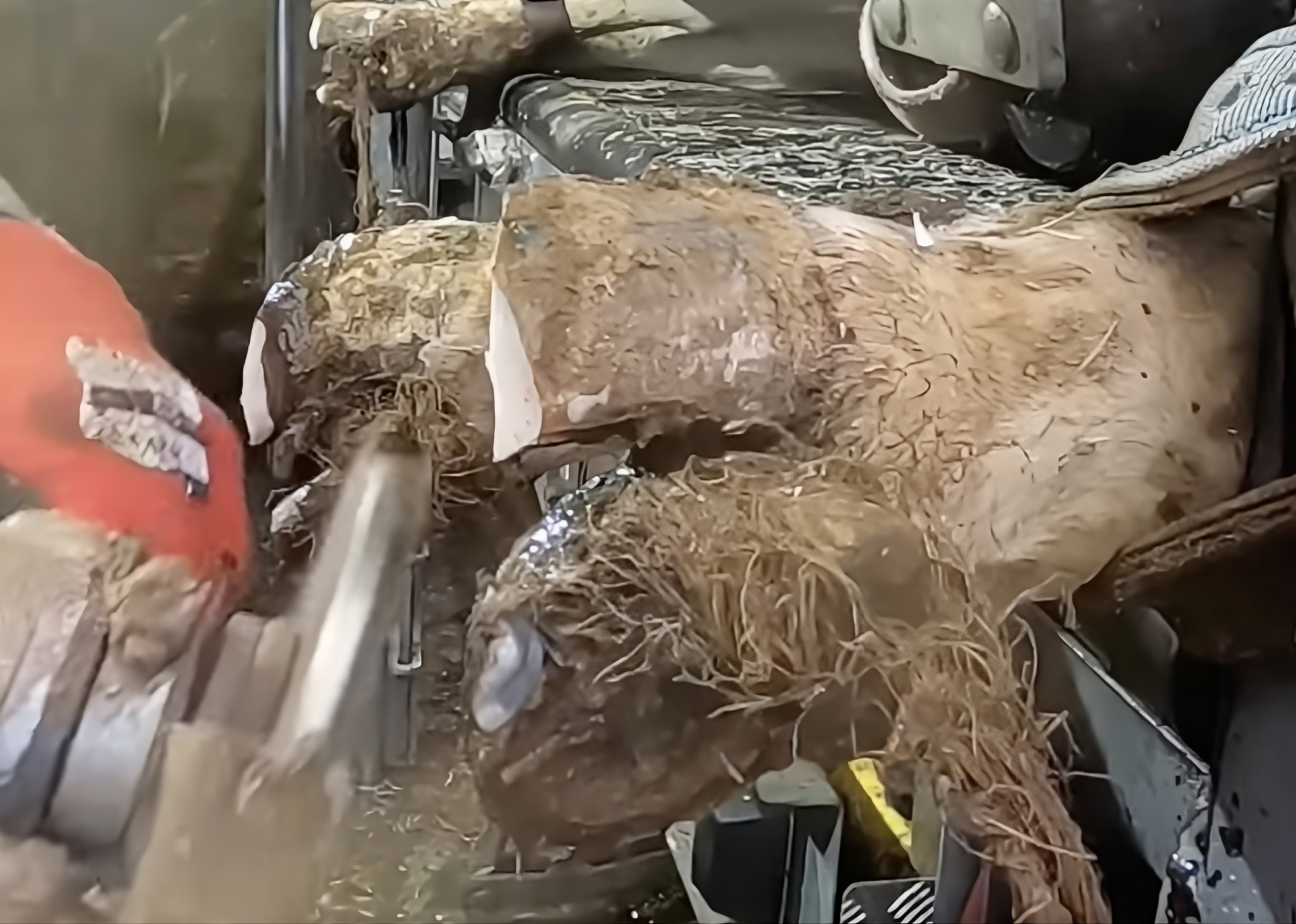
Digital dermatitis is the condition most likely to be quietly draining a UK dairy herd’s performance. It rarely announces itself — one cow shortening her stride, another dropping a place in the parlour order — but at herd level it is the leading cause of infectious lameness on most units, and lameness is expensive long before it looks dramatic. Getting digital dermatitis treatment right is less about heroics on the worst cases and more about a consistent system: spotting lesions early, treating them properly the first time, and running a footbath and hygiene routine that stops the next wave.
This guide walks through how dairy cow digital dermatitis is identified, treated at the individual level, and managed across the herd — with a fair view of what actually works and where the trade-offs sit.
What digital dermatitis is, and why it costs more than a limp
Digital dermatitis (DD, sometimes called hairy heel wart or Mortellaro) is a contagious bacterial infection of the skin, usually on the heel bulbs at the back of the foot, just above the interdigital cleft. It is strongly associated with Treponema bacteria, which is why it spreads readily through a shed once it is established and is so hard to eliminate entirely.
The reason it matters at herd level goes well beyond the visible lesion. Lameness suppresses yield, extends the calving interval because lame cows show weaker heats and hold to service less well, and pulls body condition off cows that are spending less time at the feed face. A cow with an active lesion is also a reservoir infecting her neighbours, so a handful of untreated cases becomes a herd-level problem faster than most other foot conditions.
Identifying DD: M-stages and what trimmers look for
The standard framework for scoring digital dermatitis is the M-stage (Mortellaro-stage) system, which describes the lesion’s appearance and how far along its course it is. Used consistently — ideally by the same eye at routine trimming and at footbathing — it turns a vague “she’s got Mortellaro” into a decision about what to do next.
- M0 — healthy skin, no lesion.
- M1 — an early, small lesion (roughly under 2 cm), often the first sign a trimmer catches. This is the stage where topical treatment is quickest and most effective.
- M2 — the classic acute, active ulcer: a raw, red-to-grey circular lesion that is painful and bleeds readily. This is the stage most associated with visible lameness.
- M3 — the healing stage, where the lesion has scabbed over.
- M4 — a chronic lesion, often thickened, hyperkeratotic or with proliferative “wart-like” tissue. These cows can look sound but stay infectious.
- M4.1 — a chronic lesion with a new active (M1-type) area developing within it — a flare-up on top of old damage.
The practical point is that early lesions are easy to miss when the foot is dirty. Trimmers look for them by washing the heel and pastern, checking the interdigital skin, and paying attention to the cows already flagged by locomotion scoring (the AHDB 0–3 scale). A regular mobility score is the cheapest early-warning system a unit has: it surfaces the M1 and M2 cows before they become M4 carriers.
Topical treatment: what works on the foot
For an individual active lesion — typically M1 or M2 — the priority is to clean the foot, get the cow restrained safely, and treat the lesion directly. The sequence that gives topical products the best chance is simple: wash the area, dry it, gently debride loose or necrotic tissue without making the site bleed unnecessarily, then apply the treatment to clean skin.
Topical antibiotic sprays — typically oxytetracycline aerosols (the familiar “blue spray”) — have long been used on active lesions and work well on an M2. In the UK these are licensed products but prescription-only (POM-V), so their use sits under veterinary direction; any product not licensed for cattle is used off-label under the prescribing cascade. That, plus the pressure to reduce antibiotic use across dairy, is why many units now lead with non-antibiotic topicals and reserve antibiotics for the cases that warrant them.
On the non-antibiotic side, the toolkit Hoofcare stocks covers the common approaches:
- Repiderma spray — a skin-protection spray (Intracare) that forms a long-lasting, semi-permeable layer over the lesion, protecting it while still letting the skin breathe; widely used as a first-line topical on active and healing DD lesions.
- Salicylic acid — applied to the lesion as a paste or powder under a bandage to keep it in contact, and particularly associated with the more stubborn chronic (M4) and proliferative or hyperkeratotic lesions, where its keratolytic action helps lift damaged tissue. It is not licensed for use in cattle, so it is used under the veterinary cascade — which carries a minimum seven-day milk withhold and 28-day meat withdrawal.
- Silver / Aluminium spray — an antimicrobial silver-ion cover spray used to protect and seal the treated site once the lesion has been dressed.
Where a lesion is treated with a paste or acid that needs to stay in contact with the skin, it is held in place with a dressing. Coflex cohesive bandage and Hoofcare’s hoof bandages are the usual way to keep a treatment on the lesion — the working rule is that a bandage buys contact time, but it must come off on schedule. AHDB advises that any dressing used to hold a treatment on a DD lesion is removed within two days; left on longer, a wrap traps moisture against the skin and does more harm than the lesion it was covering. You can browse the full hoof treatments range for the individual-cow products.
Footbaths: what to run, and when
Treating individual lesions keeps the worst cows comfortable; the footbath is what holds the line across the herd. Its job is not to cure active disease — it is to control transmission and keep clean feet clean by hardening skin and knocking back the bacterial load passing through. A good footbath programme is the single biggest lever most units have on DD prevalence.
The commonly used solutions each have a role and a downside:
- Copper sulphate — the mainstay skin-hardening agent, typically run at around 2–5% (AHDB gives 4–5% for a non-acidified bath, roughly 50 g of crystals per litre of water). Effective and familiar, but it is an environmental concern: copper binds to soil and accumulates when spent solution goes into slurry that is later spread on land, which limits disposal, and copper’s cost has pushed units to run it more sparingly.
- Formalin (formaldehyde) — hardens skin and has antibacterial action, and it is cheap, but it carries real handling risks (it is an irritant and a suspected carcinogen), works poorly in cold weather (it becomes ineffective below roughly 10 °C), and must be used with good ventilation and PPE. AHDB suggests running it at 2–4%, starting at 2% for the first week before increasing to 4%.
- Not salicylic acid. It earns its place on the foot — as a paste on chronic proliferative (M4) lesions, as above — but it is an individual-lesion treatment, not a footbath solution. Keep it for the cases that need it, not the bath.
Two things matter more than the exact chemical. First, foot hygiene going in: a footbath run behind a slurry-covered collecting yard is diluted and fouled within a fraction of the passes it should manage, so a pre-wash or clean-water bath first extends the working bath enormously. Second, refresh frequency: solutions are spent after a set number of cow passes and need changing on a schedule, not on the eye — NADIS guidance is roughly 100 cow passes per 100 litres of solution, and never leaving a bath more than 48 hours without refreshing. Bath dimensions (length and depth, to guarantee enough dunks per foot) and siting also change how well any solution performs. You can pick up copper sulphate and the rest of the herd-level products in the hoof treatments range.
Managing DD at herd level
No topical or footbath will out-run a wet, dirty environment. DD thrives where feet are constantly wet and contaminated with slurry, so the herd-level work is about drying feet out and cutting the bacterial load underfoot:
- Housing and scraping — more frequent scraping, good passage drainage, and avoiding slurry pooling at gateways and crossovers keep feet cleaner and drier between milkings.
- Cow comfort and standing time — well-bedded, correctly sized cubicles get cows off wet concrete and lying down, which reduces the hours feet spend in slurry.
- Hygiene at the parlour and collecting yard — the areas cows queue in are where feet sit longest in muck; keeping them clean pays back directly in DD control.
- Biosecurity on incoming stock — bought-in and returning animals are a classic route for reinfecting a herd or introducing new bacterial strains. Inspecting, footbathing and, where needed, treating incoming cattle before they join the group protects the work already done.
The other herd-level habit is record-keeping. Logging M-stage cases at each trim shows whether prevalence is trending up or down and whether a footbath change actually worked — turning DD from a running battle into something you can manage on numbers.
When to involve the vet
Most DD is managed by the trimmer and stockperson through the routine above. Bring the vet in when the case, or the herd picture, steps outside that:
- A foot that is hot and grossly swollen with suspected joint involvement is not a DD job — that points to deeper infection needing veterinary assessment, not a topical and a wrap. A hot, grossly swollen foot with suspected joint involvement needs veterinary intervention, not conservative treatment with antimicrobials, blocks and trimming alone.
- Lesions that keep recurring in the same cows, or a herd prevalence that will not come down despite a sound footbath and hygiene routine, warrant a vet-led review — including whether antibiotic treatment of active lesions is justified and how it should be done.
- Any use of prescription topical antibiotics for DD needs to sit under your vet’s direction.
Digital dermatitis is rarely eliminated, but it is very controllable. Units that keep it low do the ordinary things consistently: mobility score, catch M1 and M2 lesions early, treat them properly, run a clean footbath on schedule, and keep feet out of slurry. Get that system turning and the worst cases become rare.
Get the right products for your DD protocol
Browse the hoof treatments range — including Repiderma, salicylic acid, Silver / Aluminium spray, Coflex, hoof bandages and copper sulphate for herd-level footbathing. Not sure what fits your setup? Speak to the Hoofcare team for advice.