Lameness in dairy cattle rarely starts with a cow hobbling. It starts with uneven steps or a slightly shorter stride, a back that arches as she walks, or a cow that has slipped towards the back of the milking order. By the time she is obviously limping, whatever is wrong in the foot has had a head start. And it costs money from the first day. AHDB figures put the average milk loss from a lameness case at around 350 kg per lactation. A UK study of 427 cases across 17 herds found it added about 14 days to the calving-to-conception interval, and the average case costs roughly £330.
This guide is for the people who see the cows every day: farmers, herdsmen and stockpeople, plus the trimmers who visit their farms and need to speak the same language. It covers locomotion scoring and what the common foot conditions look like once the foot is up. It also sets out where the line sits between handling a case yourself and getting the trimmer or vet out. I trim cattle feet for a living, and the cases that go well are nearly always the ones somebody spotted early.
Locomotion scoring: the AHDB 0–3 scale
Locomotion scoring (also called mobility scoring) is the simplest early-warning system a herd has. You watch each cow walk and give her a score from 0 to 3 on the AHDB scale. Watch her from the side and from behind as she takes 6–10 uninterrupted strides on a hard, non-slip surface:
- 0 — Good mobility. She walks evenly, with a flat back and long, even strides.
- 1 — Imperfect mobility. Her strides are uneven or shortened, but you can’t yet tell which leg is the problem.
- 2 — Impaired mobility. She is uneven on a leg you can identify, or has obviously shortened strides, possibly with an arched back.
- 3 — Severely impaired mobility. She is uneven on an identifiable leg and walks more slowly than the most mobile cows in the herd. Over longer distances she is likely to fall behind or stop to rest.
The value is in doing it regularly and the same way every time. AHDB recommends checking the herd at least once every two weeks and recording scores once a month. A score 1 cow is worth watching. New score 2 cases should have their feet lifted and treated within 48 hours, and score 3 cows need urgent attention. Neither should wait for the next routine trim. Write the scores down. A list of cow numbers is what turns “a few seem a bit lame” into a job for the trimmer.
Common conditions: what to look for
Once the foot is up, wash it before you try to judge anything. Muck hides early lesions, and a lot of cases get missed for that reason alone. Then work round the foot: the skin at the back and between the claws, the sole, the white line where sole meets wall, and the wall itself.
Digital dermatitis
Digital dermatitis (DD, also called Mortellaro or hairy heel wart) is a contagious skin infection associated with Treponema bacteria, and it is a major cause of lameness in dairy cows. Look at the skin around the heel at the back of the foot, which is the classic site. The active lesion is a raw, red, circular patch that is painful to the touch. It is often described as “strawberry-like” and is often covered with a grey layer of dead tissue. Chronic lesions look different: thickened and wart-like. Trimmers grade lesions on the M-stage scale, which runs from M0 (healthy skin) and M1 (a small early lesion under 2 cm) through M2 (the active ulcer, 2 cm or more) to M4 (chronic).
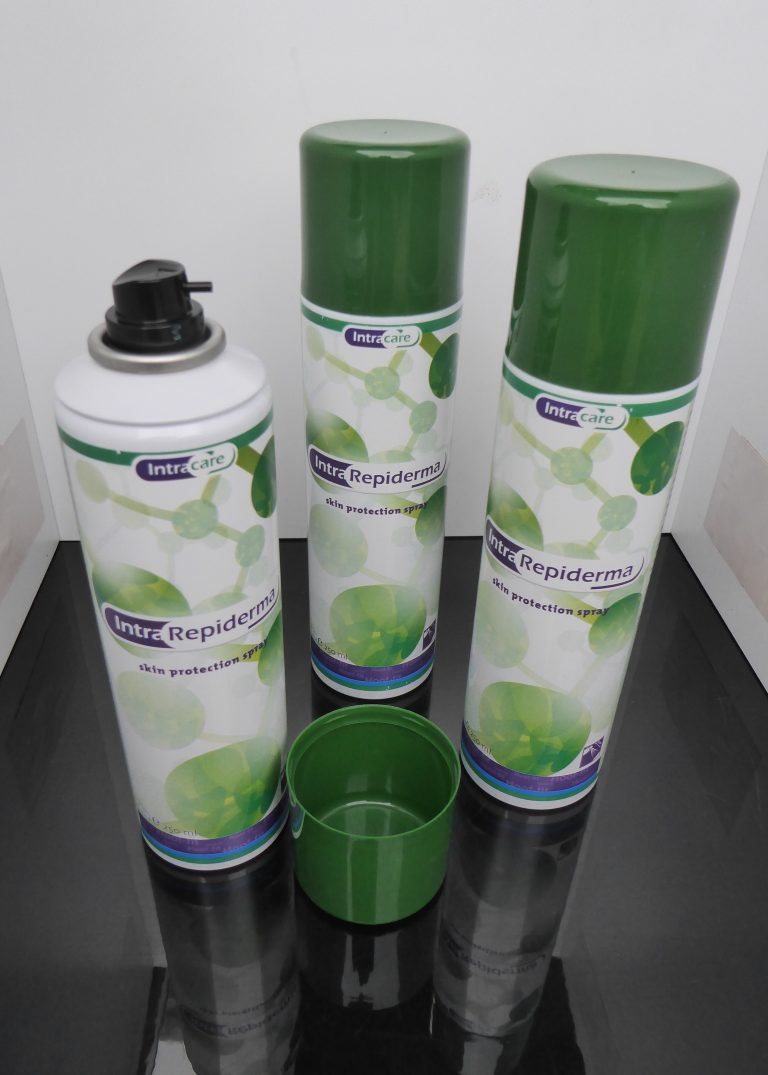
DD is a skin problem, so it is treated on the skin, not with a block. Our guide to treating digital dermatitis sets out the full protocol, from topicals such as Repiderma spray to running the footbath.
White line disease
The white line is the junction between the sole and the wall. Stones and grit can push into a weakened white line, and if infection gets in and can’t drain, it forms an abscess. Look for bruising or discolouration, separation or a pocket along the white line, most often towards the heel on the outer claw of a hind foot. A cow with pus trapped behind the wall can go from sound to very lame suddenly. Paring out and draining it is trimmer work, covered step by step in our white line abscess guide. It is usually followed by a block on the sound claw.
Sole ulcer
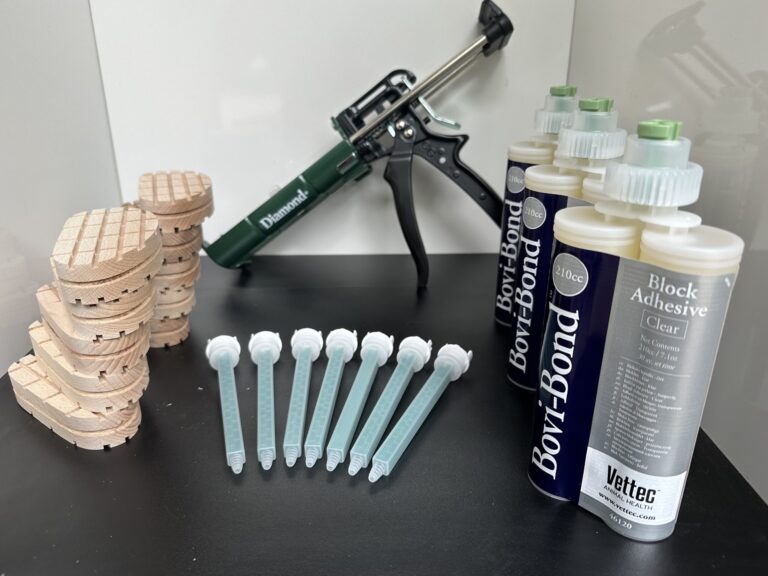
A sole ulcer is a break in the sole horn, usually towards the heel on the outer claw of a hind foot (on a front foot, it is usually the inner claw). Early on it shows as red or yellowish bruising in the sole. Later the horn is lost and the raw, sensitive tissue underneath is exposed and bleeds easily. In older cases a lump of proud flesh can push through. It is the textbook case for applying a hoof block. A block lifts the weight off the ulcer so it can heal while the sound claw carries the cow.
Foul of the foot
Foul (also called foot rot or interdigital phlegmon) is an infection of the tissue between the claws. The giveaways are sudden, severe lameness, usually in one leg; even swelling and heat around the foot; and a split in the skin between the claws with a distinctive foul smell. The swelling is what sets it apart from DD. Foul is a deeper infection and needs injected antibiotics, given on your vet’s advice.
Hoof horn cracks
Vertical cracks (sandcracks) run up the front of the wall towards the coronary band. Horizontal cracks run around the wall, parallel to the hairline. They mark a disruption to horn growth and tend to occur in association with calving, or after disease, stress or a sudden change of diet. Many cracks never make a cow lame, and vertical cracks rarely do. A deep horizontal crack is different: the section of wall below it can work loose and pinch the sensitive tissue underneath. A crack on a lame cow needs the trimmer to look at it.
Handle it yourself, or call the trimmer or vet?
A rough rule of thumb, for farms with someone trained and a safe way to lift a foot:
- Usually manageable on farm: early DD lesions caught on a clean foot and treated with a topical, plus routine footbath management.
- Call the trimmer: score 2 and 3 cows, anything that needs paring or a block (white line lesions, sole ulcers, cracks on a lame cow), and any cow you have treated that is still markedly lame 48 hours later. That last one is not a wait-and-see. Get the foot back up.
- Call the vet: a hot, badly swollen foot with suspected joint involvement. Deep infection needs veterinary treatment; antimicrobials, blocks and trimming on their own are not enough. Also call the vet for suspected foul, whenever prescription antibiotics are being considered, and when herd lameness won’t come down despite a sound routine.
For cases that are blocked, plan a recheck and removal at around four to six weeks. For DD treatments held on with a dressing, take the bandage off within two days. The hoof bandages range covers what you need.
Prevention basics: nutrition, environment, footbathing
Identification keeps the problem small. Prevention keeps the numbers down.
Nutrition. Diet affects claw horn quality. Biotin fed at 20 mg per cow per day has been shown to cut lameness from white line disease by up to 50%. Around calving, the tissues that hold the pedal bone in place weaken, and cows that lose a lot of body condition lose some of the fat pad that cushions the sole. Both are linked to sole ulcers. Talk feet with your nutritionist as well as your trimmer.
Environment. Wet, slurry-covered passages keep DD going, and long standing times on concrete, especially for freshly calved cows, bruise the sole and set up sole ulcers. Aim for 12–14 hours a day lying down, with no more than 3–4 hours a day away from the resting area. Frequent scraping, good drainage and comfortable cubicles that get cows lying down all pay back. Regular, well-timed trimming by a trained person keeps claws balanced, so weight is shared properly and the usual sole ulcer site isn’t overloaded.
Footbathing. The footbath is the main herd-level control on DD. It won’t cure active lesions, but it holds the line. Copper sulphate is the common default at 4–5% in a non-acidified bath (about 50 g of crystals per litre). Change the solution by cow passes, not by eye: roughly 100 passes per 100 litres, and never leave a bath more than 48 hours. Our guide to footbath solutions compared covers copper, formalin and zinc in more detail.
Get the right kit for the job
When you’ve spotted a problem, browse the hoof treatments range for topicals and footbath products, hoof bandages for dressings, and hoof blocks with Bovi-Bond for the claw cases. Not sure what you’re looking at? Speak to the Hoofcare team.